
Whole House Surge Protector Installation in Silver Spring, MD
Summer thunderstorms and grid switching send surges down the line. A surge protector at the panel stops them at the door instead of one outlet at a time.
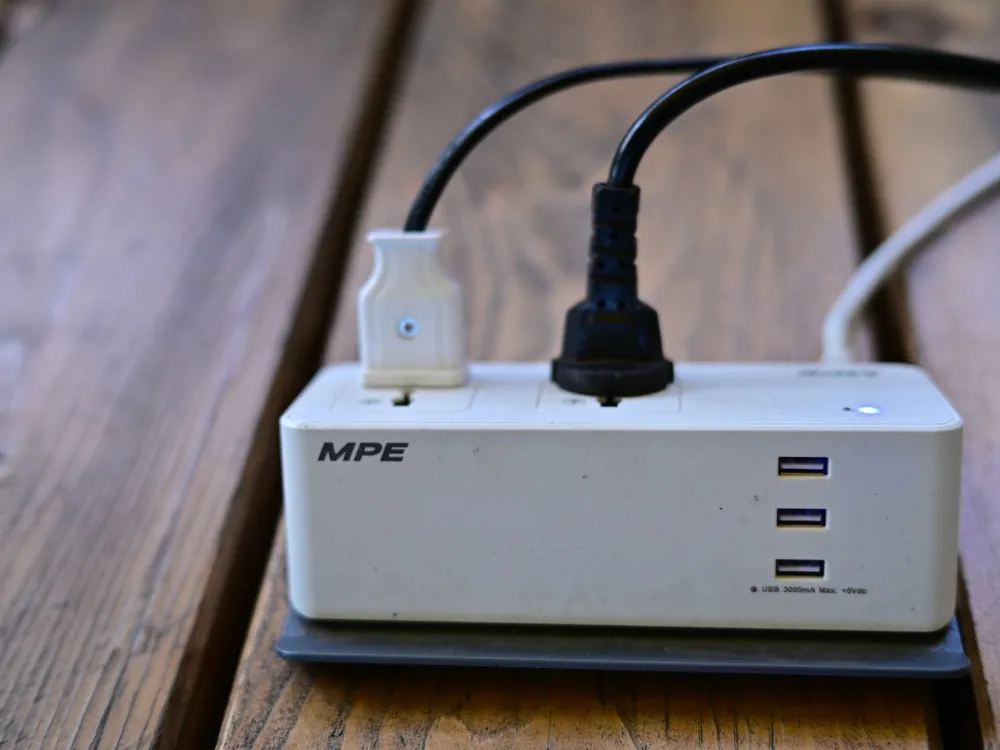
Protecting the whole house from voltage surges
A surge is a brief spike in voltage, far above the 120 volts your devices expect. Most come from the utility grid when large loads switch on and off or when a storm hits lines, and some come from inside the house when a motor such as a compressor starts. A big surge can destroy electronics in an instant, and smaller ones wear them out over time.
A plug-in surge strip protects one set of devices at one outlet, and only as well as its internal parts remain healthy. A whole-house surge protector, installed at or beside the electrical panel, protects every circuit in the house, including the appliances that are hard-wired and the ones you do not think to put on a strip: the refrigerator, the furnace controls, the washer. It does not replace point-of-use strips for sensitive equipment, but it removes the big hits before they travel through the house.
Silver Spring’s summers bring frequent thunderstorms, and a house full of electronics, smart devices and variable-speed motors is more exposed than a house from a few decades ago. Recent editions of the National Electrical Code require surge protection on the service for new homes, and existing ones can add it. We select a unit that fits your panel, install it in a dedicated breaker space, and confirm the indicator shows it working.
Reasons to add whole-house surge protection
- Electronics that fail after storms. A router, TV or garage-door opener that dies after a thunderstorm is a classic surge casualty.
- Appliances with electronic controls. Modern refrigerators, washers and HVAC systems have circuit boards that are expensive to replace.
- Lots of home office or smart-home equipment. More devices means more to lose, and more reasons to protect the circuits that feed them.
- Frequent brief power flickers. Utility switching and storm events often show up as blinks before a surge or outage.
- Planning an EV charger or other big load. Higher-load additions are a good time to add protection at the panel.
How we install a whole-house surge protector
Check the panel and service
We look at the panel brand, the available breaker space and the grounding, which determine what kind of unit fits.
Select a suitable unit
We choose a surge protective device rated for your service, with an indicator that shows when it is working.
Install and connect
The unit is wired to a dedicated breaker with short, direct leads, which matters for how well it clamps a surge.
Test and explain
We confirm the indicator, label the breaker and explain how to tell when the unit needs replacing.
What affects the price of surge protection
The device itself varies in rating and cost, and the installation depends on your panel. These are the factors:
Unit rating and quality
Units differ in the size of surge they can absorb and in features such as indicators and warranties.
Panel space and layout
A free breaker slot near the unit makes installation straightforward. A full or crowded panel adds work.
Panel age and condition
Older panels may need other attention before adding a device, which we explain before starting.
Grounding
A surge protector works best with a solid ground. If the grounding is weak, it should be addressed too.
Why Zavala Electric for surge protection
The most important parts of a surge protector installation are the ones nobody sees: short wire runs, a solid ground and a proper breaker. We pay attention to them, and we tell you plainly what a surge protector can and cannot do.
It is not a cure-all, and we do not oversell it.
Where we do this work
We install whole-house surge protectors in homes across Silver Spring and its neighbors in Wheaton, Rockville, Bethesda and Washington, DC.
Whole-Home Surge Protection questions, answered
Is a whole-house surge protector better than surge strips?
They do different jobs. A whole-house unit knocks down large surges at the panel and covers every circuit. Strips protect specific sensitive devices from smaller surges that make it past the panel. Used together, they work best.
Will it protect against a direct lightning strike?
No device can promise that. A surge protector reduces the damage from nearby strikes and grid surges, but a direct hit on the house is beyond what any of them can stop.
How long does a surge protector last?
It absorbs a little of its own capacity with each surge, so it wears out over time. Most have an indicator light that shows when it is still protecting and when it needs to be replaced.
Does my panel need to be a certain type?
Most panels can take one, provided there is a free breaker space. Some very old panels, or full ones, need other work first, and we tell you before starting.
Will it lower my electric bill?
No. It protects equipment from damage. It does not change how much electricity you use.
Does a surge protector help during a power outage?
No. It protects against voltage spikes, not loss of power. If outages are your concern, a generator or battery backup is a different topic, and we can talk through the options.
Often needed alongside whole-home surge protection
Electrical Inspection
A look at your panel, outlets and wiring before you buy, renovate or add load.
Learn more →
Power Outage & No-Power Electrician
Part of the house dark, or all of it? We work out whether it is the utility or your wiring.
Learn more →
Electrical Repair & Troubleshooting
Dead circuits, tripping breakers, buzzing outlets: find the cause, then fix it.
Learn more →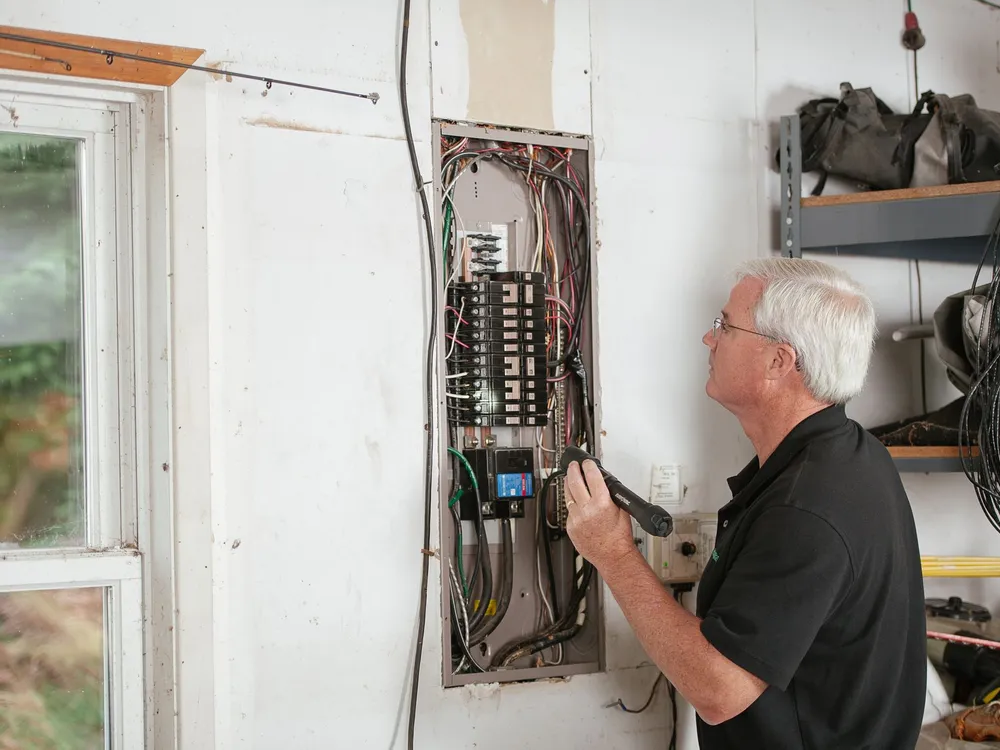
All Panels & Service
Breaker panels, service capacity and whole-home surge protection.
Learn more →Protect the electronics you cannot afford to replace
Tell us about your panel and what you want to protect and we will quote the installation.
¿Prefiere español? Llame al (507) 491-2869.